
About the Finnish Spitz
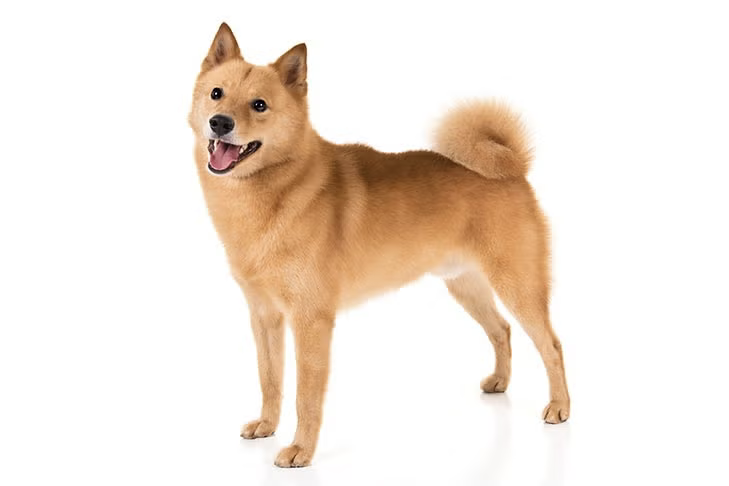
The Finnish Spitz is one of the least-known dog breeds in the U.S. They are a nordic breed, which means they are normally found in colder climates. They have a coat that is in two parts: the first part, closest to the skin, being dense, fluffy and protective from temperature extremes of cold; the second being longer reddish guard hairs which help them shed moisture. They have a fox-like head, and their crowning glory is the dense tail which they carry proudly curled over their back and hip.
Description
The Finnish Spitz is a medium-sized, squarely built, lively dog. The beautiful red-gold color and fox-like expression are the most important features of the breed. Small erect ears and a curled tail complete the picture. In appearance the male is decidedly masculine, usually larger and carrying more coat than the female, who is noticeably feminine.
Characteristics and Training
The Finnish Spitz has been bred for centuries as a “barking hunting dog,” bringing the hunter to him with his voice. Prospective owners should note that while this is an asset in hunting, barking could cause an unpleasant situation with neighbors in close proximity unless the dog is taught that unprovoked barking is not acceptable. He is more a warning dog than a guard dog and rarely bites. He has acute hearing and makes an excellent watchdog, as he is protective of his family and will advise you of any unusual happenings. The Finnish Spitz is a wonderful family dog as well as a hunting dog. He has a special love for children and will spend countless hours romping and playing; if the kids get too rough, he will simply walk away. He is a dog with a sense of family. He is slow to mature, and although a Nordic breed, he seems little concerned about heat or cold.
This is an extremely intelligent breed which becomes very much a part of the family and should be allowed to share in family life. However, this is not the breed for every family. Households with tension, harshness or loud bickering should not have a Finnish Spitz. Because of his intelligence, he is independent and strong-willed and cannot be bullied. He can be trained with a firm but gentle voice and touch, and responds better to praise than correction. He is easily bored, so training sessions should be kept short and interesting. Patience is a key word when training a Finnish Spitz — you may feel as if you are making no headway, and then all of a sudden he will surprise you. Many Finnish Spitz do well in obedience classes when trained with a praise-and-reward method rather than a heavy hand.
Care and Maintenance
With shades of red-gold from pale honey to dark auburn, the Finnish Spitz double coat consists of a short, soft, dense undercoat covered by long, straight, harshly textured guard hairs. The Finnish Spitz is a meticulously clean dog, sometimes giving the impression that they groom themselves. They should be brushed weekly — especially during coat change — and bathed only when needed. This is a natural “wash and wear” dog on whom no trimming should be done, except under the pads of the feet; trimming the whiskers or sculpturing for the show ring is to be heavily penalized. Nails should be kept trimmed and ears and teeth cleaned. With an annual trip to the veterinarian and proper shots, the Finnish Spitz can live a lively long life — 13 to 15 years is not unusual. This dog loves to eat and will do his best to get extra goodies; he can easily become overweight, which causes health problems in the long run. Feed a good-quality dog food with few supplements, and keep treats limited and low in fat.
Read more in our Breed History and Breed Standard sections. If you are seeking a Finnish Spitz for your family, please visit our Breeder Referral page.
Continue exploring the Finnish Spitz
- Breed History — from ancient Finnish hunting dogs to today.
- Breed Standard — the blueprint by which the breed is judged.
- Health — screening and the famous vocal trait.
- Videos — see the breed in action.
- Things to Do — sports and activities for your Finkie.
- Is a Finnish Spitz Right for You? — an honest look before you commit.
- Breeder Referral — find a responsible FSCA member breeder.